Listen on: Apple Podcasts | Spotify | YouTube
CE Event Details
- Instructor: Dr. Brady Phelps
- Location: Asynchronous Online
- Number of Learning CE's earned: 1.5
- ACE Organizational Provider: Positive Behavioral Outcomes, LLC; OP-23-10227
- ACE Organizational Coordinator: Matthew J. Cicoria, MS, BCBA
Event Highlights
In this episode of the Behavioral Observations Podcast, I had the pleasure of speaking with Dr. Brady Phelps, about a topic that has perplexed, and perhaps captivated both mainstream Psychology as well as pop culture: Dissociative Identity Disorder (DID). Our wide-ranging conversation explored the intersection of behavior analysis, mental health, and trauma, with a special focus on how we can understand DID through a scientific, behavioral lens.
Brady’s Career Journey
Brady shared how he discovered behavior analysis almost by accident as an undergrad at Utah State University, under the mentorship of Carl Cheney. After a long academic career, Brady retired in 2021 but remains actively involved in the field. He’s currently developing an Experimental Analysis of Behavior (EAB) toolkit with Dr. Steve Eversole at Behavior Development Solutions, and he's also writing a textbook on learning and behavior designed to be accessible to 20-year-olds.
Understanding Dissociative Identity Disorder Behaviorally
We dove deep into Brady's research on DID, originally published in 2000. His goal was to approach DID from a behavior-analytic perspective, not through traditional psychoanalytic theory. As we discussed, DID has evolved from being characterized by dramatic behavioral shifts to more subtle, self-reported identity disruptions. Brady argued that the identities themselves are better understood as reified constructs—products of distorted tacting that contacts reinforcement—rather than discrete psychological entities.
Trauma, Dissociation, and Behavioral Function
Brady emphasized the importance of not dismissing trauma reports, while also cautioning against assuming trauma automatically leads to DID. We talked about avoidance behaviors, escape contingencies, and how dissociation might function as a response to overwhelming experiences. He brought up examples like Cotard’s Syndrome to show how distorted tacting can manifest in extreme ways.
Rethinking Diagnostic Criteria for DID
We discussed research into amnesiac barriers, such as the Concealed Information Test, which shows people might learn something even if they claim not to remember it. These findings, Brady suggested, should prompt a re-evaluation of how DID is diagnosed, particularly the differences between the Post-Trauma Model and the Social-Cognitive Model—the latter of which emphasizes social reinforcement and therapist influence in shaping alternate identities.
Therapy Techniques and Reinforcement Contingencies
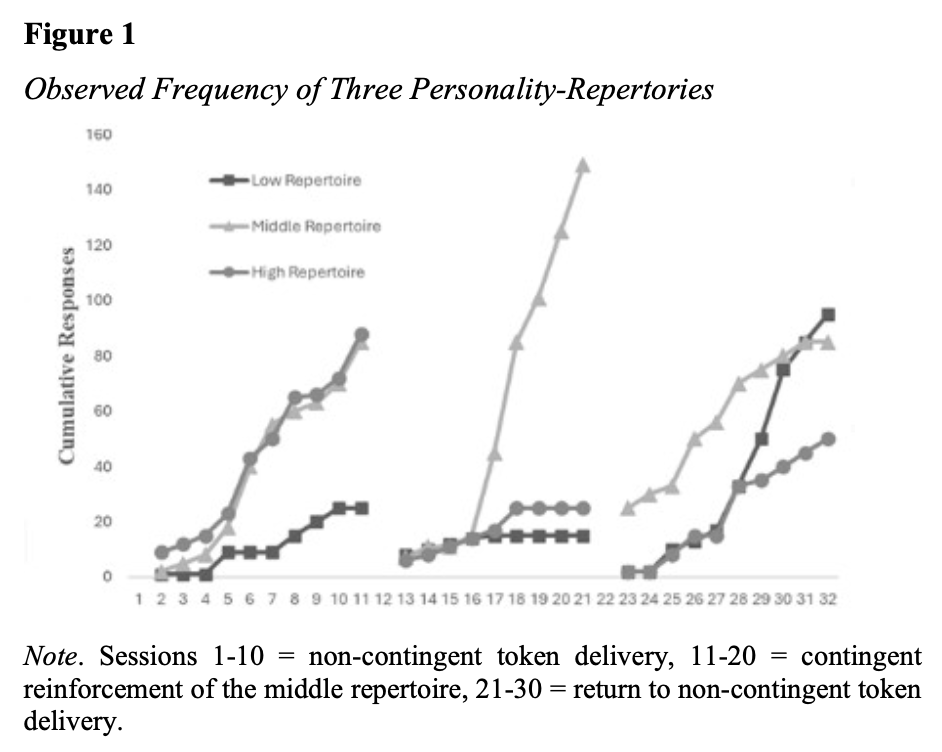
Brady detailed how some therapists use techniques like “roll calls” or even suggesting names to clients in session. While these methods may sound extreme, they reflect how therapist behavior can inadvertently reinforce identity fragmentation. We also discussed Robert Kohlenberg’s 1973 study on behavioral repertoires, which demonstrated how social reinforcement shaped client behavior across different identity presentations.
The Sybil Case and Media Influence
We revisited the infamous Sybil case, which helped popularize DID in the 20th century. Despite being exposed as fraudulent, Sybil’s story continues to shape public and clinical views of the disorder. We also talked about more recent media portrayals—from TikTok to a 2023 Scientific American article—and how social media can reinforce the performance of alternate identities, especially among vulnerable populations.
Behavior Analysis in Mental Health
Brady and I wrapped up with a discussion on how behavior analysts can contribute to mental health conversations. He encouraged new BCBAs to collaborate with non-behavioral colleagues while staying rooted in behavioral principles. Above all, he emphasized balancing empathy with scientific rigor—understanding people without falling into speculative mentalism.
Show Notes and Resources
- Phelps (2025). Dissociative Identity Disorder: An Analysis of the Behaviors and Contingencies
- Phelps (2000). Dissociative Identity Disorder: The Relevance of Behavior Analysis
- Kohlenberg (1973). Behavioristic approach to multiple personality: A case study
- Wakatama (2024). Court allows witness with dissociative identity disorder to give evidence in multiple personalities
- Explore the EAB Toolkit at Behavior Development Solutions
- Lester (2023). A New Therapy for Multiple Personality Disorder Helps a Woman with 12 Selves
- Who was Sybil? The true story behind her multiple personalities
You must log in to submit a review.
Remember, you can save a lot when you purchase multiple events!
Session 262: Behavior Analytic Approaches to Counseling and Therapy with Pat Friman (Ethics)
Listen to on: Apple Podcasts | Spotify | YouTube Instructor: Pat Friman, Ph.D.; CEUs: 1.5 (Ethics) Dr. Pat Friman returns to discuss the Behavior Analytic approaches he uses with patients. In this episode, we… Read more »
Session 176: Inside JABA 10, Towards Trauma-Informed Applications of Behavior Analysis
Session 176, Inside JABA Series #10 Towards Trauma-Informed Applications of Behavior Analysis Instructors: Adithyan Rajaraman, Ph.D., BCBA-D & Jennifer Austin, Ph.D., BCBA-D Session 176 Inside JABA Series 10 CE Offering:… Read more »
Session 50: Get Your ACT Together with Dr. Jonathan Tarbox!
Session 50 Get your ACT together with Jonathan Tarbox Acceptance and Commitment Therapy (ACT) is an exciting development in Behavior Analysis. In this episode of The Behavioral Observations Podcast, Jonathan… Read more »